Home › Road, Street, and Municipal Paving
From neighborhood streets to local roads, we deliver reliable road paving in Omaha, NE. Our crews handle base prep, asphalt placement, and striping for smooth, long lasting public and private roads.
Precision Asphalt Omaha provides professional road paving throughout Omaha, NE, Nebraska and the surrounding area. Our licensed, insured crew delivers safe, clean, on-time work with a free estimate before anything begins. Call (402) 370-7792 or request your free quote.
Road, Street, and Municipal Paving in Omaha, Built for Real Traffic
Road paving in Omaha is not about laying a quick layer of blacktop and hoping it holds. With our freeze-thaw cycles, heavy truck traffic on main routes, and older utility networks under many streets, it takes careful planning and execution to build pavement that actually lasts.
Precision Asphalt Omaha focuses on road, street, and municipal paving that fits how each roadway is really used. A collector street serving school traffic in West Omaha needs different design thickness and striping than a light-use neighborhood lane in South Omaha or an industrial access road near the rail yards.
Before we price or design a project, we look at traffic volume and mix, expected truck loads, subgrade soil conditions, drainage paths, and what is happening under the pavement (water mains, sanitary and storm lines, and shallow utilities that are common in older Omaha neighborhoods). This allows us to recommend a pavement structure that is appropriate instead of just defaulting to the thinnest section that might pass inspection.
Whether your project is a short municipal street extension, a rural-urban transition road at the edge of the city, or a resurfacing project on an existing public route, Precision Asphalt Omaha treats it as a long-term asset that needs to perform in Nebraska weather, not a one-season patch.
How We Approach Road Paving Projects From Start to Finish
A successful road paving job in Omaha starts long before the first truck shows up. Our typical process has several stages, and we walk city staff, engineers, or private owners through each step so there are no surprises.
1. Site review and data gathering. We review any plans and prior geotechnical reports, then inspect the actual corridor. We look for rutting, alligator cracking, pumping at joints, and ponding water, because these reveal base and subgrade issues that a simple overlay will not fix. On older streets in areas like Benson or near 42nd Street, we are especially cautious about buried utilities and historic sections of concrete under existing asphalt.
2. Pavement design and scope. Working within your budget and local standards, we help refine the pavement section. For a municipal collector road, this may mean a crushed aggregate base with multiple asphalt lifts, each with a specified thickness and mix type. On lighter duty residential streets, we can often reduce total thickness without sacrificing performance by focusing on proper subgrade preparation and drainage.
3. Traffic control and staging. In Omaha, closing an entire street at once is rarely practical. We develop phasing that keeps access for residents, schools, and businesses, coordinate with bus routes, and follow MUTCD-compliant signage and detours. For arterial roads, we often pave in halves or at night to keep traffic moving.
4. Subgrade and base preparation. We proof roll the subgrade with loaded trucks or rollers to identify soft spots, then undercut and replace them as needed. In some of the silty clay soils common along the Papio and in older neighborhoods, we may recommend stabilization or using a thicker base course to keep the pavement from flexing too much.
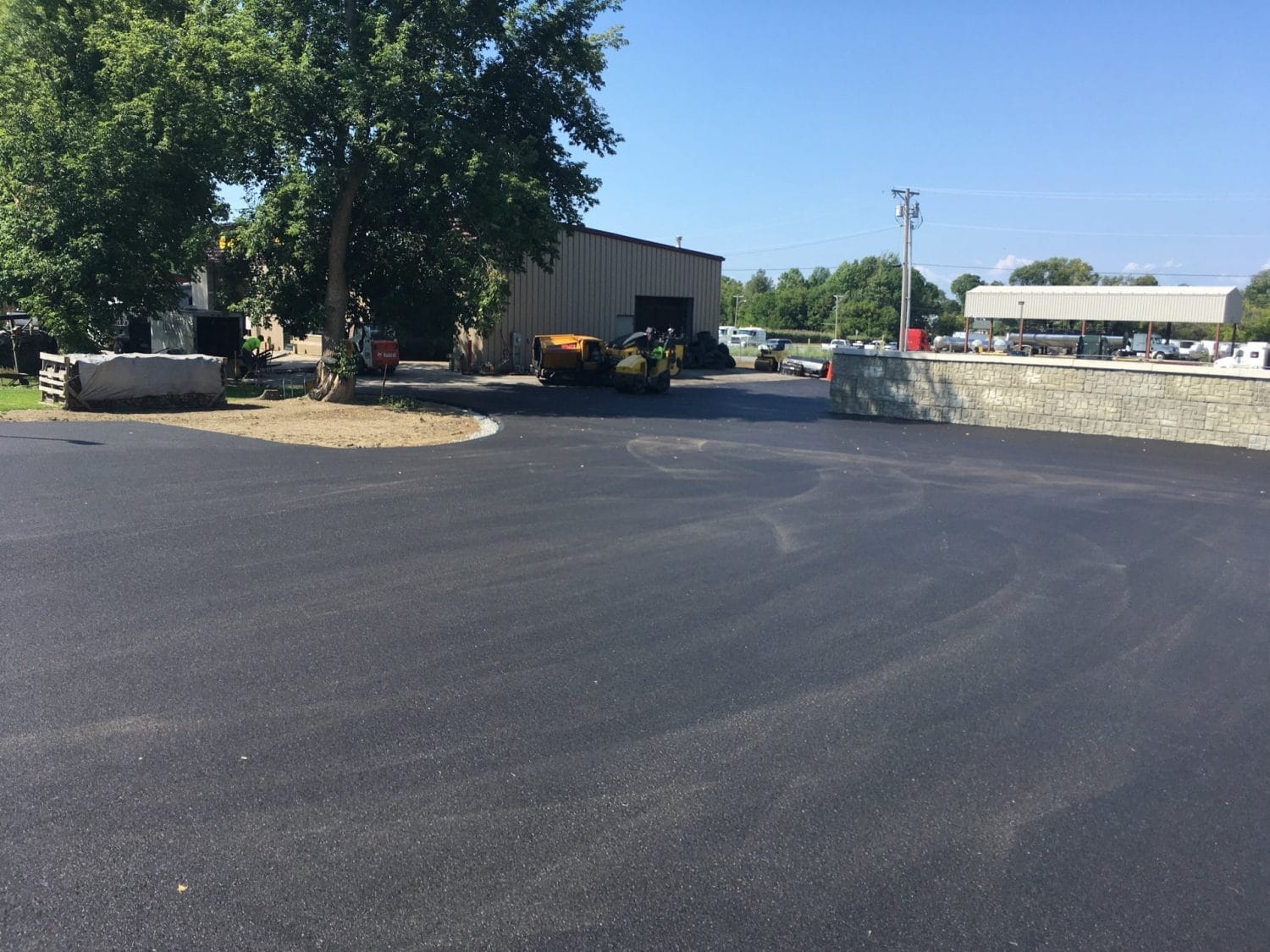
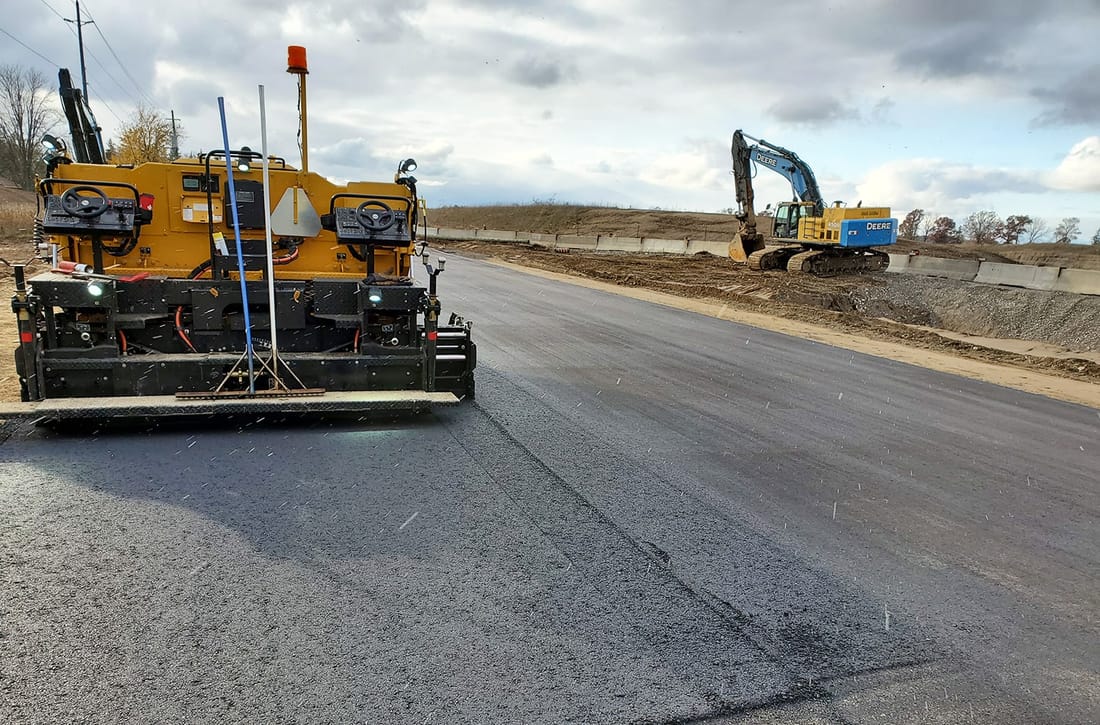
5. Asphalt placement and compaction. We typically place asphalt in multiple lifts. A base course provides structural strength, an intermediate course (if used) helps distribute load, and a surface course provides smoothness and skid resistance. Each lift is compacted to target density using steel drum and pneumatic rollers, checked with on-site testing so you get the life you are paying for instead of an under-compacted road that breaks down early.
6. Finishing work and punch list. After paving, we handle curbs if they are part of the scope, adjust manhole and valve heights, place permanent striping, and restore driveways and lawns that were disturbed. We then walk the project with the owner or city representative to confirm it meets expectations and required specs.
Materials and Design Options That Fit Omaha Roads
Not every mile of pavement in Omaha needs the same material recipe. Precision Asphalt Omaha tailors the mix and design details to how and where the road will be used, along with the city or county standards you must follow.
Asphalt mix selection. For heavy truck routes and industrial access roads, we recommend mixes with higher quality aggregate and modified binders that stand up better to rutting under slow, heavy loads. Residential and low-volume streets often use a more economical mix that still handles Nebraska winters but does not overspend on unnecessary performance.
Lift thickness and structure. A typical local residential street may use a total asphalt thickness in the 4 to 6 inch range over a compacted base, while a bus route or major collector could require 7 inches or more with a stronger base. In older parts of Omaha where streets have been resurfaced multiple times, we often mill down old asphalt to reset curb reveal and avoid creating drainage problems or steep driveway transitions.
Milling versus full reconstruction. If the existing base is sound and utilities are not being moved, we may recommend mill and overlay. This involves grinding off a set depth of the existing asphalt and placing new lifts to restore smoothness and structure. It is faster, less disruptive, and more cost-effective than full reconstruction. If the road is showing deep structural failures, or if water is trapped inside older layers, we will be direct about the need for a full-depth rebuild.
Drainage and cross slope. Local flooding and ponding are common sources of premature road failure in Omaha, especially during fast summer storms or when snowmelt refreezes at night. We pay close attention to cross slopes, curb and gutter elevations, inlet spacing, and transitions at intersections to keep water moving. Correcting drainage on a paving project may add some cost up front, but it is usually far cheaper than dealing with repeated potholes and patching later.
Surface texture and striping. For municipal streets near schools, parks, or bike routes, we coordinate on surface texture, crosswalk markings, and lane striping to support safety goals. On busier routes, we focus on centerlines, turn lanes, and stop bars that stay visible under winter sanding and deicing operations.
What Drives Road Paving Cost in Omaha (And How To Control It)
Road and municipal paving budgets are always tight, so it helps to know what actually moves the number up or down. Precision Asphalt Omaha is straightforward about where your money goes and where you can save without hurting performance.
Project size and mobilization. Very small segments of road can be more expensive per foot because you still need traffic control, equipment, and testing. Combining several short stretches into one project, or coordinating with neighboring districts, can spread those fixed costs and bring unit prices down.
Depth of repairs. The biggest cost difference is usually between a simple mill and overlay and full-depth reconstruction. If we can verify that the base and subgrade are stable, we will recommend rehabilitation instead of full rebuild. If we see widespread base failure, pumping, or serious frost heave, we will explain why spot patching will not hold up and would waste taxpayer or association funds.
Utility conflicts and adjustments. Streets in older parts of Omaha often have multiple manholes, valve boxes, and shallow utilities that must be adjusted or protected. Each structure that must be raised, lowered, or rebuilt adds labor and materials. Proper coordination with utility owners early in design can avoid last-minute changes that drive costs and delays.
Access requirements and schedule. Maintaining constant access to businesses, schools, or emergency routes can require additional staging, temporary surfaces, and night or weekend work. If you have flexibility on when certain areas can be closed, we can often streamline the phasing and reduce labor costs.
Quality control and testing. Meeting city or county specs usually requires on-site density and material testing. Cutting this corner might look cheaper in the short term, but under-compacted asphalt or poorly graded base will shorten pavement life dramatically. We build realistic testing and inspection into our estimates so you know the pavement is built as designed.
We encourage municipal clients, HOA boards, and private road owners in Omaha to ask for line-item clarity in any paving quote. If another bid is much lower, it often means fewer inches of asphalt, minimal base repair, or little to no provision for handling soft subgrade or drainage corrections. We will gladly explain, in plain terms, what is included and what is not so you can compare fairly.
Common Road Problems in Omaha and How We Fix Them for the Long Term
Our team works on Omaha roads every season, so we see the same patterns of distress again and again. Knowing what causes each problem is the first step in fixing it the right way instead of covering it up.
Potholes and alligator cracking. These usually point to water infiltration and failing base, not just surface wear. If they are isolated, we cut out and replace full-depth sections so the patch ties into solid material on all sides. If they are widespread, it is a sign the entire lane or road segment needs structural attention, not a simple overlay.
Rutting in wheel paths. This is common on truck routes and near intersections where vehicles brake and accelerate. If the rutting is shallow and the base is sound, we can mill the ruts and place a rut-resistant surface course. If rutting is deep, we often need to address the underlying asphalt layer or base material that is deforming under load.
Severe edge cracking. On rural roads and streets without full curb support, edge cracking often comes from poor shoulder support and repeated loading near the edge of pavement. We correct this with proper shoulder build-up, thicker edge sections where feasible, and sometimes widening narrow pavements so traffic does not ride the edge constantly.
Frost heave and settlement. Nebraska’s freeze-thaw cycles can lift and drop pavements where water is trapped in the subgrade. At joints, around manholes, and at utility trenches, this shows up as bumps or dips that return every year. The only durable fix is improving drainage and stabilizing or replacing problem soils in those zones before repaving.
Drainage-related failures. Sections where water sits after storms or snowmelt will deteriorate early. On these roads, we often focus on correcting grades, cleaning or adding inlets, or adjusting curb lines. A minor grading change alongside the road can sometimes extend pavement life more than adding extra asphalt.
When Precision Asphalt Omaha proposes a repair or reconstruction method, we tie it back to the underlying cause we see on your road, not a one-size-fits-all template. The goal is fewer callbacks, fewer emergency patches, and a smoother, safer street or road that holds up for its full design life in Omaha’s climate.