Home › Asphalt Pathways, Sidewalks, and Trails
Enhance access and recreation with asphalt pathway paving in Omaha, NE. We construct smooth, accessible sidewalks, park paths, and multi use trails for pedestrians and cyclists.
Precision Asphalt Omaha provides professional asphalt pathway paving throughout Omaha, NE, Nebraska and the surrounding area. Our licensed, insured crew delivers safe, clean, on-time work with a free estimate before anything begins. Call (402) 370-7792 or request your free quote.
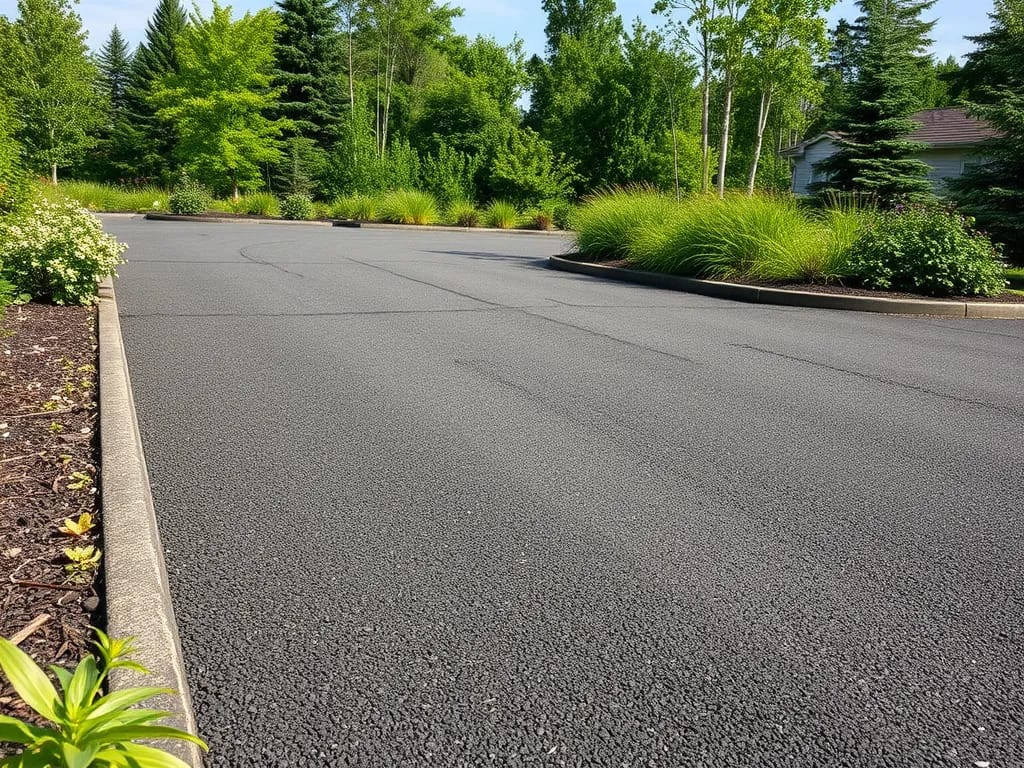
Asphalt Pathway Paving in Omaha That Holds Up to Real Foot Traffic
When you put in a pathway, sidewalk, or trail, you need it to stay smooth and safe for years, not just look good on day one. At Precision Asphalt Omaha, we build asphalt pathways that handle dogs, strollers, bikes, golf carts, and Nebraska freeze-thaw cycles without breaking apart.
Asphalt pathway paving is not the same as paving a driveway or a parking lot. People walk, run, and ride much closer to the surface, so small dips or cracks become tripping hazards fast. For parks, school campuses, and neighborhood walkways, we focus on a firm base, clean transitions at driveways and street crossings, and smooth edges that do not ravel away.
Around Omaha we design every asphalt path with our local soil, drainage, and weather in mind. Clay-heavy subgrades near the river, older neighborhoods with tree roots, and low spots that stay soggy after a thunderstorm all demand different prep work. Our crews walk the route with you, mark problem spots, and set realistic expectations about how wide the path should be, what kind of slope it can safely have, and how to manage water so it drains off the surface instead of sitting in shallow puddles.
How We Build Long-Lasting Asphalt Pathways, Sidewalks, and Trails
A durable asphalt pathway starts with site prep. We begin by stripping sod and topsoil, usually 4 to 8 inches, depending on how soft the ground is. In older Omaha yards and park spaces we often find buried construction debris from past projects, and that gets removed or bridged with extra base so it does not settle later. If the path crosses a sprinkler line or shallow utility, we coordinate around that so you are not dealing with breaks after the fact.
Next comes shaping the subgrade and drainage. We grade the route with a slight crown or cross-slope, often around 1.5 to 2 percent, so rainwater sheds off instead of soaking in. In low-lying parts of town or near creek beds we may cut in shallow swales or add small culverts to move water under the path. This part controls how the surface behaves for the life of the trail, so we do not rush it.
On top of that we spread and compact an aggregate base, usually 4 to 6 inches of crushed concrete or limestone for typical pedestrian and light bicycle traffic, sometimes more for golf carts or maintenance vehicles. Compaction is done in thin lifts with vibratory rollers so the base locks together. Around curves and intersections we pay extra attention to eliminating soft spots that can later turn into dips.
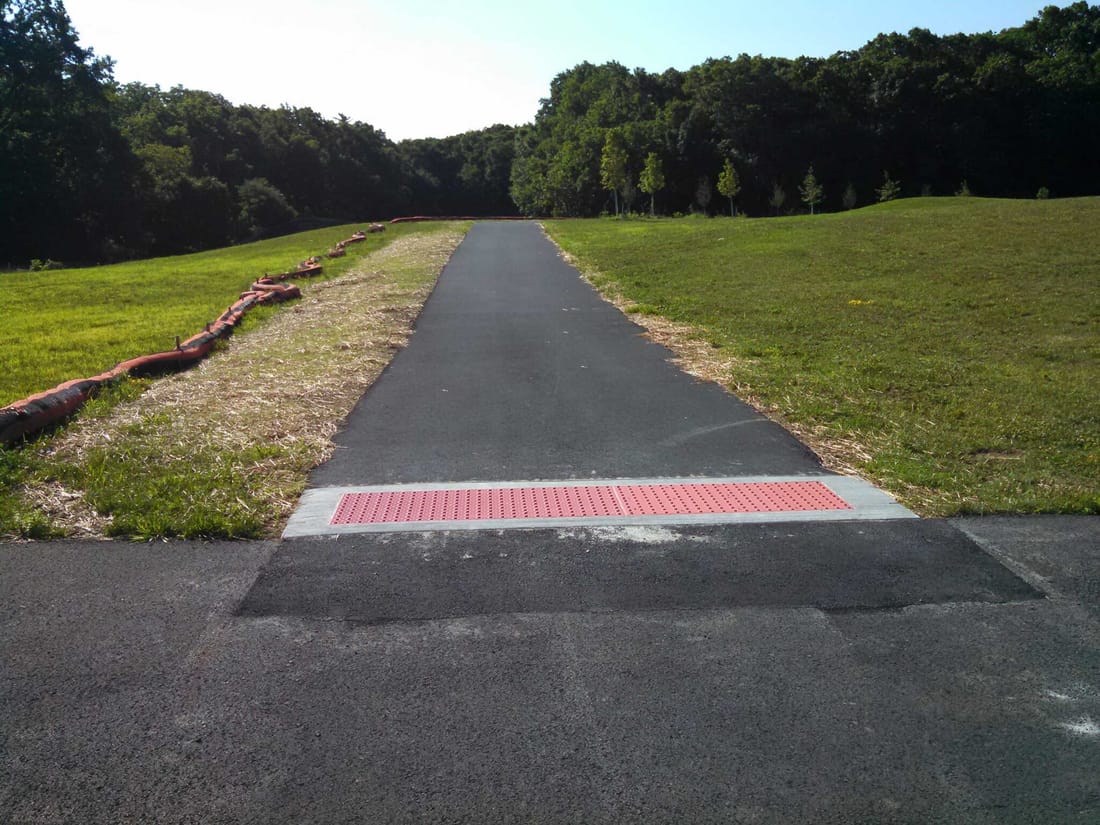
Paving comes next. For most sidewalks and neighborhood paths we install 2 to 3 inches of hot-mix asphalt in one or two lifts. Where snow removal equipment or service vehicles will drive on the path, such as park maintenance routes or school campuses, we increase the depth and adjust the mix to resist rutting. Our crews hand-work tight spots at driveway tie-ins, ADA ramps, and intersections, then compact the surface while the mix is still hot to achieve a tight, smooth mat.
Design Options, Widths, and Finishes for Your Asphalt Path
Asphalt pathway paving is not one-size-fits-all. Before we bring equipment onto your property, Precision Asphalt Omaha helps you work through layout, size, and finish so the path fits how people will actually use it.
Width is the first big decision. A simple residential walkway might be 3 to 4 feet wide so two people can pass. Neighborhood connectors, school routes, and shared-use trails usually run 8 to 10 feet to handle bikes, strollers, and walkers side by side. Park and greenbelt trails that also need room for maintenance trucks may go up to 12 feet, sometimes with thicker pavement in turning areas.
Alignment and curvature matter too. Tight curves look nice but can cause raveling or cracking if snowplows or carts ride the edge every winter. We look at your property lines, trees, and slopes, then suggest gentle curves and wider radiuses that are easier on both users and the pavement. Where tree roots are likely to push up the surface, we may recommend root barriers, slight route shifts, or base reinforcement so the path does not heave in a few seasons.
For the surface itself, most clients choose a standard black asphalt finish that we compact to a smooth but slightly textured surface for grip in winter. On higher-profile projects we can add colored seal coats or striping to mark lanes and edges, especially useful on busy campus or park trails. For visibility and safety, we often suggest contrasting asphalt or paint at street crossings, school pick up zones, and transitions to concrete sidewalks.
Costs, Timing, and Seasonal Considerations in Omaha
The cost of asphalt pathway paving in Omaha depends on several real-world factors. Length and width are obvious, but the less visible items usually drive price more than people expect. Soft or saturated soils that require thicker base rock, tight access that limits equipment, and tricky drainage work can all change the number more than the asphalt tonnage itself.
For a straightforward residential asphalt walkway with decent access, most of the budget goes into excavation, base prep, and compaction. Larger shared-use trails in parks or developments add surveying, grading over longer distances, and sometimes erosion control measures along ditches or creek banks. If we are tying into existing concrete or pavement, we factor in saw cutting, removal, and careful matching so you do not have bumps or lips.
Omaha weather plays a big role in scheduling. Asphalt must be installed when the ground and air temperatures are warm enough for proper compaction, typically late spring through early fall. In spring we watch for soft, thawing subgrades, since building over mud or frost pockets leads to early failures. In late fall we pay close attention to forecasted lows, and if temperatures drop too fast overnight the surface can cool before it is fully compacted, which shortens its lifespan.
Rain is another factor. Light mist might not shut a project down, but steady rain will. Installing asphalt on a saturated base traps moisture, which later causes potholes and shoving. Precision Asphalt Omaha will be upfront with you about weather delays and will not rush a job just to get it done on the original date if it means sacrificing quality.
Maintenance, Repairs, and How to Get the Best Life From Your Path
Well-built asphalt pathways, sidewalks, and trails can last many years in Omaha if you give them basic care. We usually recommend keeping heavy trucks off pedestrian paths unless they are designed for that load. Early on, within the first year, the asphalt is still curing, so tight turning of heavy equipment on the surface should be avoided where possible.
Crack sealing is the most important maintenance item. Nebraska freeze-thaw cycles will eventually open small cracks, especially where water runs across the path or near shaded spots that stay icy longer. Once those cracks appear, sealing them keeps water and salt out and slows down erosion of the base underneath. Precision Asphalt Omaha can set up a simple inspection and seal plan so small issues are handled before they turn into patchwork.
If isolated depressions or ruts show up, we usually core down to see whether it is a base failure or just surface wear. Shallow problems can be fixed with milling and an overlay. Deeper failures require cutting out a section, rebuilding the base, and matching back into the existing path. It is important not to simply “cap” serious low spots with more asphalt, because that traps water and shifts the problem instead of solving it.
Over time, seal coating can help protect the surface from UV and water, especially on exposed trails and school paths that see salt and sand in winter. We will be honest about whether your path is a good candidate for a seal coat or whether your money is better spent on structural repairs. When you call Precision Asphalt Omaha, we are prepared to talk in plain terms about the condition of your pathway, not just sell you a service that looks nice for a year but does not fix the real issue.